How the Iran War Is Moving Oil, Stocks, and Bond Yields
Financial markets are undergoing a significant repricing as the United States and Iran reach a tentative deal to extend their ceasefire and reopen the Strait of Hormuz. This geopolitical de-escalation has immediately triggered a sharp decline in oil prices, which in turn has fueled a broad rally in global equities and a stabilization in bond yields. For investors, the primary mechanism at work is the removal of the "war premium" on energy, which lowers input costs for corporations and reduces the perceived necessity for central banks to maintain aggressive interest rate postures.
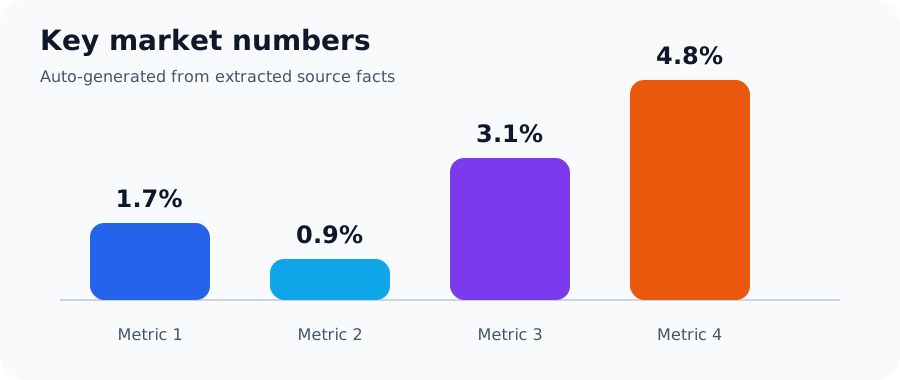
The direct answer to how this conflict is moving markets lies in the cooling of inflation expectations. As Brent crude oil prices fell 4.8% to $83.17 per barrel following the announcement, the pressure on global supply chains eased. This move has allowed the S&P 500 to climb 1.7% and the Nasdaq composite to jump 3.1%, led by fuel-sensitive sectors like travel and high-growth technology stocks that benefit from lower discount rates. Simultaneously, the bond market has responded with the 10-year Treasury yield slipping to 4.47%, reflecting a shift in trader sentiment regarding future interest rate hikes.
The de-escalation of energy supply risks
The primary catalyst for the recent market shift is the tentative agreement between Washington and Tehran to reopen the Strait of Hormuz, a critical chokepoint for global oil transit. According to a report by the Associated Press, this deal aims to restore the global flow of crude, which had been severely restricted during the height of the conflict. The immediate result was a significant drop in Brent crude, which fell back to levels not seen since early March.
While oil prices remain above the $70-per-barrel mark seen before the outbreak of hostilities, the retreat from the recent highs of over $100 per barrel is a relief for the global economy. The "war premium"—the extra cost added to oil due to the risk of supply disruptions—is evaporating as the physical threat to tankers and infrastructure diminishes. However, the energy industry is not expected to return to full capacity instantly. Experts suggest it could take several months for production and shipping logistics to reach pre-war efficiency, even if the Strait fully reopens as scheduled.
This move in oil is not just about the price at the pump. Energy is a foundational input for almost every sector of the economy. Lower oil prices reduce the cost of producing fertilizer, which impacts food prices, and lowers the cost of fuel for logistics and manufacturing. By removing the threat of a sustained energy spike, the deal has effectively lowered the ceiling on near-term inflation projections, providing a clearer path for corporate earnings growth.
Why markets care: The inflation and interest rate connection
The relationship between oil prices and central bank policy is the most critical link for institutional investors. When energy prices spike, they create "cost-push" inflation that is difficult for central banks to control without raising interest rates to dampen demand. The drop in oil prices following the Iran deal has fundamentally changed the calculus for the Federal Reserve and other monetary authorities.
Data from the CME Group highlights this shift in sentiment. Before the tentative deal was announced, traders were pricing in a 71% chance of another interest rate hike this year. Following the news, that probability dropped to 57%. This repricing suggests that the market now believes the "inflationary hump" caused by the war is subsiding, potentially allowing the Fed to pause or even consider cuts sooner than previously anticipated.
The bond market mirrored this optimism. The yield on the 10-year Treasury, a benchmark for everything from mortgages to corporate loans, slipped from 4.48% to 4.47%. While the move appears small, it signifies a halt in the upward momentum of yields that had been weighing on the housing market and business investment. When yields stabilize or fall, the present value of future corporate cash flows increases, which is a primary reason why equity valuations—particularly in the tech sector—have seen a sudden boost.
Who is most affected: Winners and losers across sectors
The relief in energy prices has created a distinct set of winners in the equity markets. Companies with high fuel consumption were the most immediate beneficiaries. For example, United Airlines saw its shares rise 3.9%, while cruise operator Royal Caribbean Group jumped 6.6%. For these industries, fuel is one of the largest operating expenses; a 5% drop in oil can translate directly into improved profit margins and better-than-expected quarterly guidance.
Beyond the travel sector, the technology industry has also led the rally. Nvidia, currently Wall Street’s most valuable company, saw its stock climb 3.5%. As the heaviest weight in the S&P 500, Nvidia’s performance often dictates the direction of the broader index. The mechanism here is twofold: lower interest rate expectations make the high future earnings of tech companies more attractive, and a more stable geopolitical environment encourages the "risk-on" sentiment necessary for growth-stock outperformance.
Conversely, the energy sector itself faces a period of adjustment. While high oil prices are a burden for consumers, they are a boon for oil explorers and producers. As the price of Brent crude retreats, the record profits seen by energy giants over the last few months may begin to normalize. Investors are rotating out of defensive energy plays and back into cyclical and growth sectors, betting that a more stable global economy will drive broader market participation rather than a narrow rally led by oil and gas.
Possible short-term financial impacts
Despite the current euphoria, the financial impact of the Iran deal remains subject to significant "execution risk." The agreement is currently described as "tentative," and while it addresses the immediate flow of oil, it does not resolve long-standing issues such as Iran’s nuclear program. The Associated Press reported that negotiations on these more complex topics are expected to continue over the next 60 days.
This 60-day window creates a period of potential volatility. If negotiations hit a "hiccup" or if either side accuses the other of violating the ceasefire, the war premium could return to oil prices almost instantly. Traders are likely to remain sensitive to any headlines regarding the formal signing of the deal or the actual volume of oil passing through the Strait of Hormuz.
Furthermore, the lag in the energy industry's recovery means that the full benefits of lower oil prices may not hit consumer wallets or corporate balance sheets for another quarter. While the *price* of oil has dropped on the futures market, the *cost* of refined products like gasoline and jet fuel often takes longer to adjust. Investors should watch for whether these lower commodity prices actually translate into lower Consumer Price Index (CPI) readings in the coming months, as that will be the ultimate confirmation the market needs to sustain this rally.
What readers should watch next
As the market processes the initial news of the deal, several key indicators will determine if the current rally in stocks and the drop in yields are sustainable. The first is the actual reopening of the Strait of Hormuz. While the deal has been announced, the physical movement of tankers is the concrete evidence the market requires. Any reports of delays or security incidents in the Strait would likely reverse the recent gains in the airline and cruise sectors.
Second, the upcoming inflation reports will be scrutinized for "pass-through" effects. If the drop in energy prices leads to a cooling of core inflation, the 57% probability of a rate hike could fall even further, providing more fuel for the Nasdaq and S&P 500. Conversely, if other costs—such as labor or housing—remain high, the benefit of lower oil might be neutralized, leaving the Federal Reserve in a "higher for longer" stance despite the geopolitical de-escalation.
Finally, the 60-day negotiation period regarding the nuclear program is a major wildcard. Financial markets dislike uncertainty, and two months of headlines regarding nuclear centrifuges and international inspections could lead to "choppy" trading. Investors should monitor the rhetoric from both the White House and Tehran for signs of a more permanent diplomatic framework, which would be necessary to bring oil prices back toward the $70 level seen before the conflict began.
Final takeaway
The tentative deal between the U.S. and Iran has acted as a pressure-release valve for a global economy that was beginning to buckle under the weight of high energy costs and rising interest rates. By lowering the price of Brent crude and reopening vital shipping lanes, the agreement has reduced the immediate threat of a stagflationary shock. The resulting rally in stocks, led by heavyweights like Nvidia and fuel-dependent travel companies, reflects a market that is eager to pivot away from war-driven volatility and back toward fundamental economic growth. However, with a 60-day negotiation window ahead and the energy industry still months away from full speed, the path to a permanent market recovery remains dependent on the successful transition from a tentative ceasefire to a formal, lasting agreement.
This article is for educational purposes only and does not constitute financial advice.
How this shock is feeding into oil, inflation expectations, stock performance, bond yields, and the next signals investors should watch.
Stay ahead of the next move
If you found this useful, join the GrowthVisual newsletter for concise market briefings, key numbers, and the next signals to watch.
GrowthVisual Editorial Team reviews and publishes practical market analysis, calculator guides, and personal finance explainers.